
The Magical World of W. W. Denslow: Illustrations in The Wonderful Wizard of Oz
In recent weeks, I’ve started to read L. Frank Baum’s The Wonderful Wizard of Oz with my son. This is actually the first time I’ve read the book … and I’m loving it. Those evening readings that include a new illustration (as a rule we don’t thumb ahead and look at the next ones…) are always exciting ones, and I couldn’t resist the chance to include them in a post here.
When The Wonderful Wizard of Oz was first published in 1900, it quickly captivated readers with its enchanting story and vibrant illustrations. These illustrations, created by W. W. Denslow, played an integral role in bringing L. Frank Baum‘s fantastical world to life. Denslow’s artwork not only complemented the text but also became iconic in its own right, influencing how generations of readers visualize the Land of Oz. (Baum’s The Wonderful Wizard of Oz was the first book in what became a fourteen-volume series, and I hope we continue this journey in the months and years to come.)
Before he and Baum collaborated on The Wonderful Wizard of Oz, Denslow worked with the author of previous projects, including Father Goose: His Book (1899). The title became the bestselling children’s book of that year. Perhaps its success was owed, at least in part, to their insistence on including full-color illustrations. This also meant that the pair had to agree to pay all printing costs.
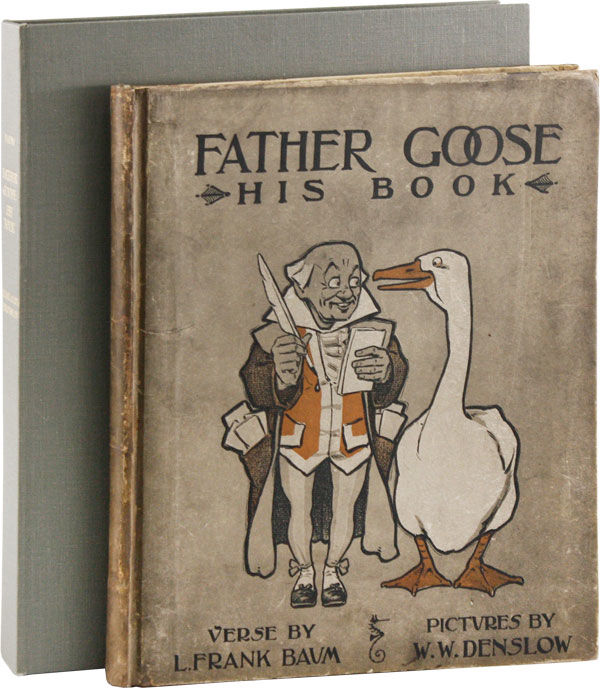
Father Goose: His Book (1899) is a whimsical collection of rhymes and illustrations, known for its playful and rhythmic verse. The commercial success of the work established Baum’s reputation as a writer of children’s literature. The humorous and imaginative poems, paired with Denslow’s lively and often comical illustrations, capture the spirit of childhood in a delightful and accessible way.
Published a year before The Wonderful Wizard of Oz, the book’s innovative combination of witty text and vibrant illustrations showcased Baum’s talent for creating engaging stories for young readers and set the stage for his future work. The collaboration with W. W. Denslow in Father Goose laid the groundwork for their subsequent partnership on The Wonderful Wizard of Oz, marking the beginning of Baum’s enduring legacy in the world of children’s books. The book’s popularity reflected the growing demand for American-made children’s literature at the turn of the century, emphasizing the importance of humor and play in educational materials for children.
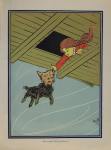
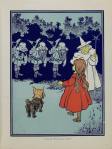
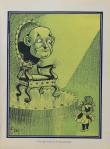
This was the case with The Wonderful Wizard of Oz, too, which was even more lavishly illustrated. Denslow worked closely with Baum to create pictures of characters and landscapes not described in the text.
W. W. Denslow was an accomplished illustrator and caricaturist, known for his bold and distinctive style. His collaboration with Baum on The Wonderful Wizard of Oz was a creative synergy that helped elevate the book to classic status. Denslow’s illustrations were innovative for their time, utilizing vivid colors, imaginative designs, and a playful approach to character and landscape that perfectly matched the whimsical tone of Baum’s story. For this title, author and illustrator worked closely to create pictures of characters and landscapes not described in the text. As Denslow said, he had to “work out and invent characters, costumes, and a multitude of other details for which there is no data — and there never can be in original fairy tales.”
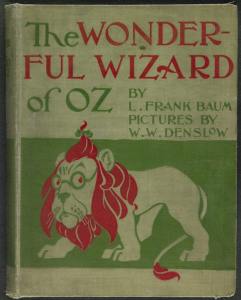
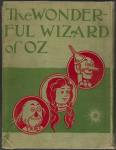
The Wonderful Wizard of Oz (1900) front cover. Please click on the image for the complete book.
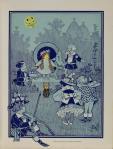
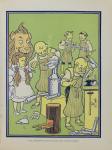
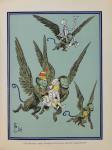
One of the most striking features of Denslow’s illustrations is his use of color. The original book was printed in color, which was a rare and expensive process at the time. Each chapter was framed with a different color scheme, reflecting the mood and setting of the story. For example, the land of the Munchkins is depicted in shades of blue, while the Emerald City is, fittingly, illustrated in vibrant greens. This use of color helped to create a visual language that guided readers through the various regions of Oz, enhancing their immersion in the story.
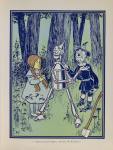
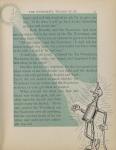
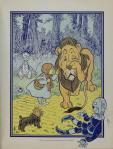
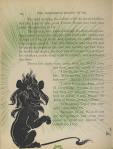
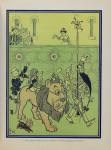
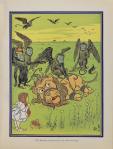
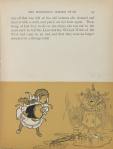
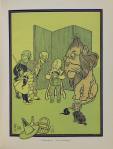
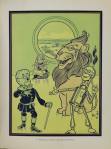
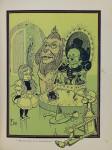
Denslow’s character designs have also left a lasting impression. The Scarecrow, the Tin Woodman, and the Cowardly Lion each have a distinct and memorable look, characterized by simple shapes and expressive features. The Scarecrow, for instance, is portrayed with a charmingly lopsided face and a body made of straw that seems almost human. The Tin Woodman, with his heart-shaped body and funnel hat, is both mechanical and endearing. Denslow’s Lion, with his oversized head and soulful eyes, conveys both bravery and vulnerability. These designs have become so iconic that they continue to influence depictions of these characters in other media.
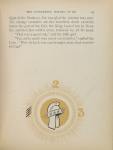
In addition to his character illustrations, Denslow’s landscapes and backgrounds add depth to the world of Oz. His depictions of the Yellow Brick Road winding through fields, forests, and deserts create a sense of adventure and movement. The Emerald City, with its tall spires and glittering façade, feels both magical and imposing. Denslow’s ability to create a cohesive and visually stunning world helped readers to fully engage with Baum’s story, making the book not just a literary journey, but a visual one as well.
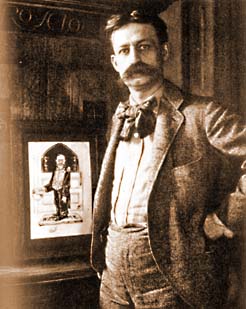
As a sign of their partnership, Denslow held joint copyright with Baum for most of the books they worked on together, as well as for the Broadway musical The Wizard of Oz, which debuted in 1902. Despite the success of The Wonderful Wizard of Oz, Denslow and Baum had a falling out over creative differences and financial disputes. As a result, Denslow did not illustrate the subsequent Oz books, but his contribution to the first book remains a cornerstone of its enduring appeal.
W. W. Denslow’s illustrations for The Wonderful Wizard of Oz are more than just accompanying images; they are an essential part of the story’s magic. Through his use of color, character design, and imaginative landscapes, Denslow helped to create a version of Oz that has become deeply ingrained in popular culture. His work continues to enchant readers and viewers alike, proving that the power of illustration can be as timeless as the stories they depict.
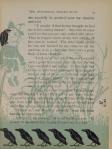
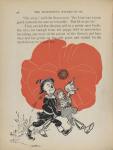
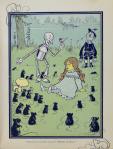
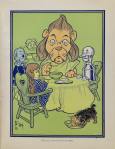
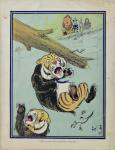
Since they are in the public domain, I thought I’d share all of the images here for everyone’s enjoyment and easy reference. The magic of The Wonderful Wizard of Oz lies not only in its timeless story but also in the enchanting illustrations that continue to transport readers to a world where imagination knows no bounds. Take a step into Oz…




 The Projector
You must be logged in to post a comment.