
Dodge’s Literary Museum
Welcome back to Book by Book! In Series Two, we dive into my teaching collection—a curated glimpse into my personal library of historical treasures. Discover rare books, vintage newspapers, and intriguing ephemera that I use in my classes. Join me as I share images from these unique items. With no commentary, let these artifacts speak for themselves as they reveal their fascinating stories and historical significance.
This week’s entry is an August 1852 issue of Dodge’s Literary Museum. The Literary Museum was a 19th-century American periodical published in Boston from 1852 to 1854. Edited by Ossian E. Dodge, the magazine featured a wide range of literary content, including short stories, poetry, editorials and essays, biographical sketches, correspondence, and music. Aimed at a broad audience, Dodge’s Literary Museum offered both entertainment and education, showcasing works by established and emerging writers. It was particularly known for its emphasis on American literature, though it also included international miscellanea, reflecting the literary tastes and cultural interests of the period. The decade saw the rise of large-circulation magazines, the growth of the penny press, and the popularity of serialized fiction.
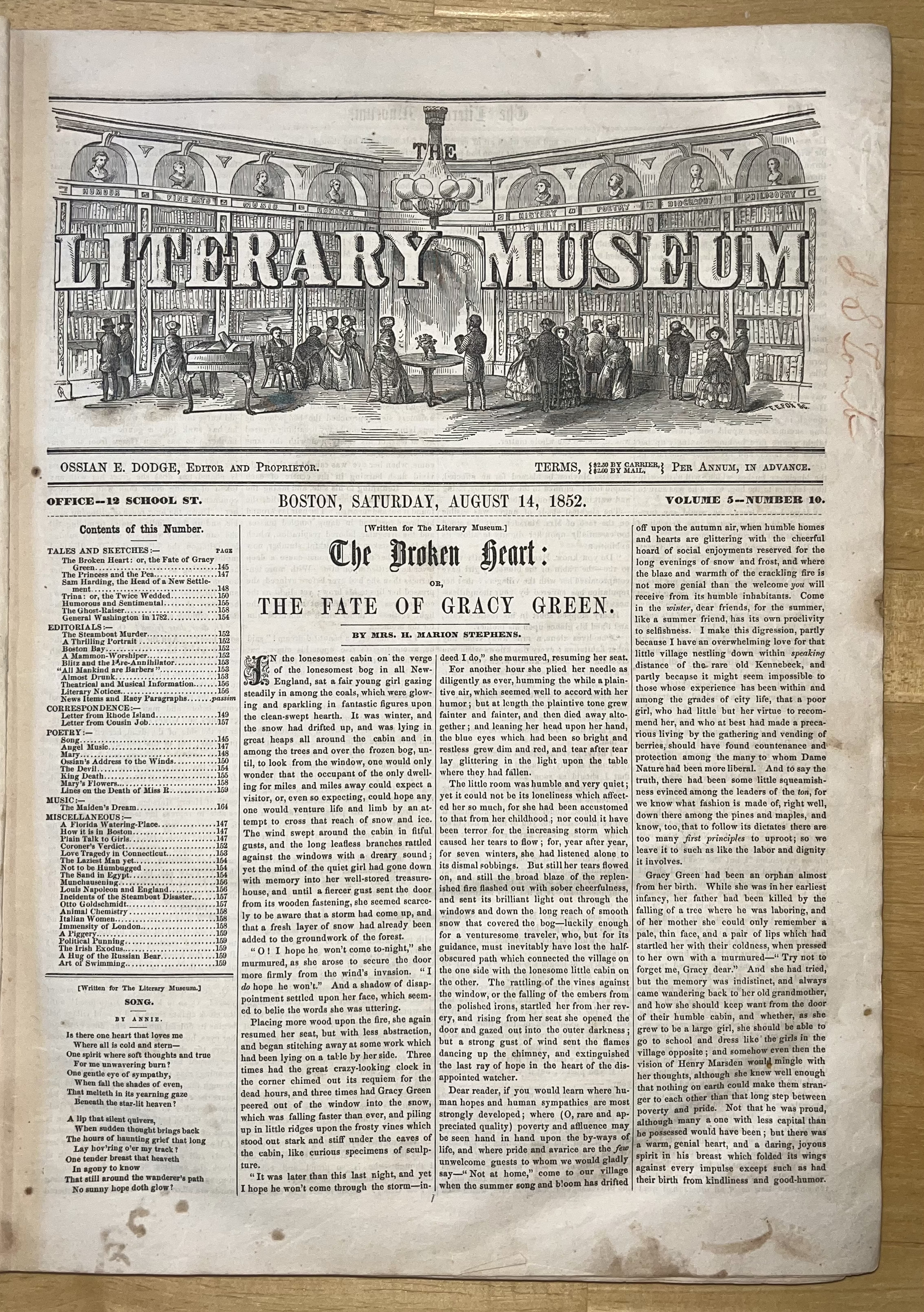
The origins of this periodical can be traced to an earlier magazine, Boston Museum (also entitled Boston Museum and Literary Portfolio and Boston Weekly Museum), published by Charles V. Putnam from 1848 to June 1852. In the 1850s, literary magazines and newspapers in America were undergoing significant changes, driven by technological advancements, shifts in readership, and the evolving social and political landscape. This period marked a crucial time in the development of American print culture, as publications began to reflect and influence the country’s growing national identity.
The magazine was published weekly, making it a regular source of literary content for its readers, and it quickly gained popularity for its diverse range of stories, essays, and poems. In its relatively brief tenure, the magazine published George Lippard, Henry Wadsworth Longfellow, Fanny Fern, and Louisa May Alcott, among other recognizable names.
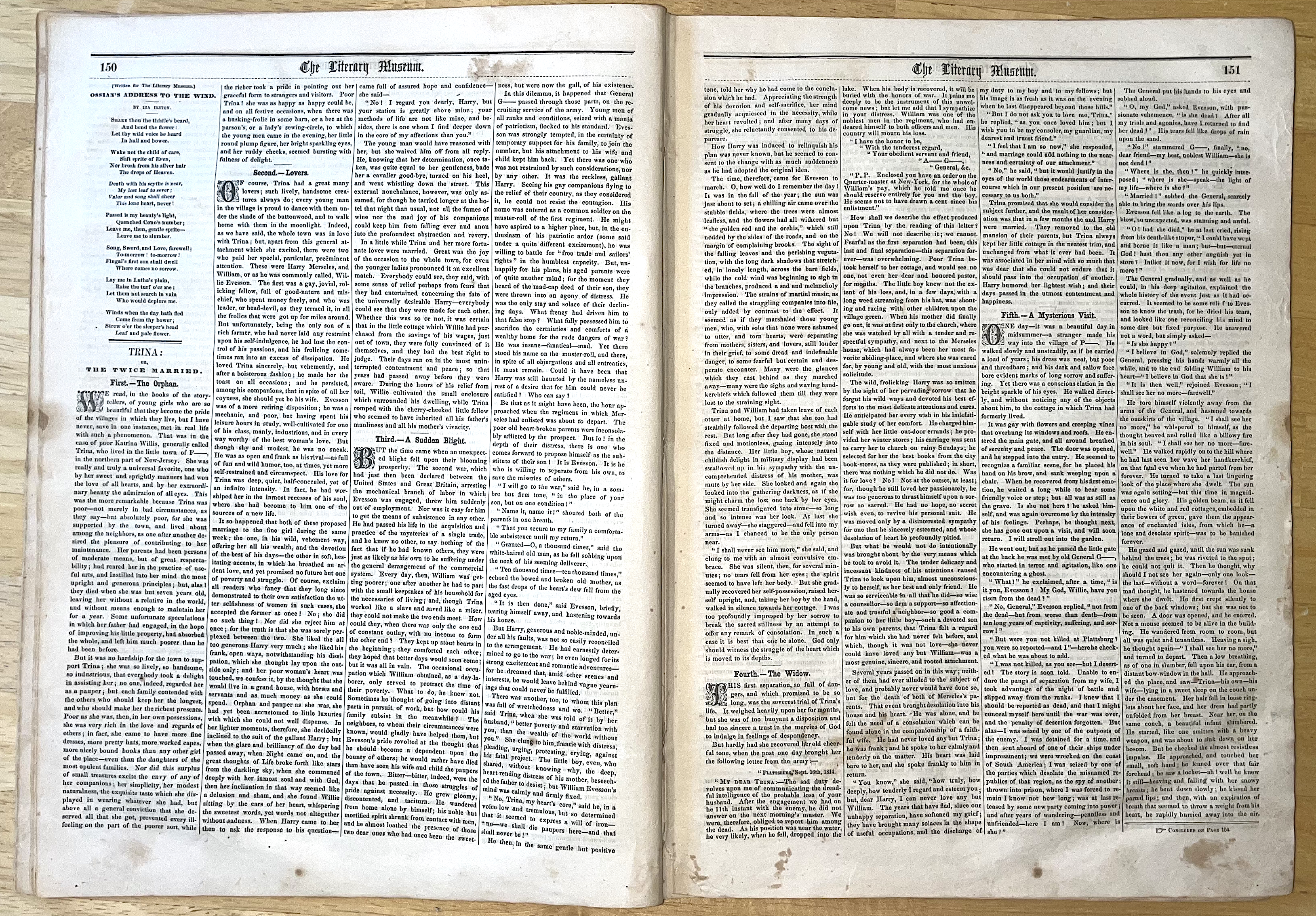
Dodge’s Literary Museum holds historical significance as a reflection of mid-19th-century American literary tastes and social values. It is a valuable resource for understanding how literature was consumed and valued during this period, particularly among the middle class. The magazine’s focus on American authors and its inclusion of international literature makes it an important document for studying the transatlantic literary exchange and the development of a distinctly American literary identity, as well as local Boston publishing networks. Furthermore, Dodge’s Literary Museum can serve as a case study in the history of publishing, illustrating how periodicals contributed to the dissemination of literature and ideas in the pre-digital age. By analyzing the magazine’s content, structure, and readership, students and researchers can gain a deeper understanding of the literary landscape of nineteenth-century America and the role periodicals played in shaping it.
I hope you’ve enjoyed this visual journey through my collection. Don’t forget to like, comment, and subscribe!

 The Projector
You must be logged in to post a comment.