
James Howell’s Familiar Letters: A New Video in Book by Book
Here’s the latest addition to my ongoing series Book by Book! In Series Two, we dive into my teaching collection—a curated glimpse into my personal library of historical treasures. Discover rare books, vintage newspapers, and intriguing ephemera that I use in my classes. Join me as I share images from these unique items. With no commentary, let these artifacts speak for themselves as they reveal their fascinating stories and historical significance. Enjoy this visual journey through my collection and immerse yourself in the past. Don’t forget to like, comment, and subscribe!
This episode explores James Howell’s Epistolæ Ho-Elianæ: Familiar Letters, Domestic and Forren: Divided into Four Books. 5th ed. London: Printed for Thomas Guy, 1678.

Epistolae Ho-Elianae, or Familiar Letters, is a seminal work by James Howell (c.1594–1666), a Welsh historian and writer. First published in 1645, it offers a personal and historical glimpse into life during the tumultuous English Civil War. Howell’s letters provide reflections on political, social, and literary issues; they established the letter as a respected literary form in English.
Educated at Jesus College, Oxford, Howell traveled extensively throughout Europe, including France, Spain, and Italy. He was among the first writers to make a living solely from his works, his career unfolding during the politically charged early Stuart period. Familiar Letters is a collection of letters written over decades, addressed to friends, diplomats, literary figures, and patrons.
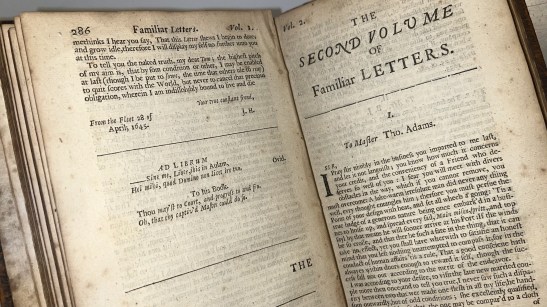
The first edition of Epistolae Ho-Elianae was published in 1645. Howell was imprisoned in London’s notorious Fleet Prison during the early 1640s for debt and political reasons, and it was during this period that he organized and polished many of the letters for publication. The work was well received, and Howell continued to add to the collection over the years.
Subsequent editions were published in 1647 and 1650, with Howell continuing to revise and expand the work. Familiar Letters remained popular through the 17th and 18th centuries, influencing later writers like Samuel Richardson and Jean-Jacques Rousseau. From a historical perspective, Howell’s letters provide valuable insights into the diplomatic, cultural, and political landscape of 17th-century Europe. His vivid descriptions of European cities and political courts also contributed to the development of English travel literature, making Familiar Letters a lasting window into early modern intellectual life.
The work seen here is the fifth edition, published in four volumes for Member of Parliament and merchant Thomas Guy (1644-1724). Guy also published the fourth edition and used profits from both printings for the founding of Guy’s Hospital, London.
One special feature of this copy is the penciled signature and bookplate of Sir William Overend Priestley (1829-1900). Priestley was a British physician and Conservative Party politician, who was knighted in 1893 in recognition of his medical services. The slightly detached leather binding here also serves as a teaching opportunity to examine nineteenth-century repair work on the spine and the sewing and exposed raised bands and boards underneath. This is easily one of my favorites from the collection.

 The Projector
You must be logged in to post a comment.