
The Legacy of Andrzej Wróblewski: A Pioneer of Polish Modern Art
This winter, I will begin working on a new project that I hope will include selected artworks by Andrzej Wróblewski. This a short introduction to the painter and his work as I prepare to dig in…
Born in 1927 in the Polish city of Lwów (now Lviv, Ukraine), Andrzej Wróblewski is often celebrated as one of the most significant figures in post-war Polish art. Despite his tragically brief life—Wróblewski died in a mountaineering accident in 1957 at the age of 29—his work continues to resonate and inspire contemporary artists and art lovers alike.
Wróblewski was a complex artist, navigating the turbulent waters of Polish society in the aftermath of World War II. His formative years were marked by the devastation wrought by war, and these experiences deeply influenced his artistic vision. He simultaneously studied Painting and Sculpture at the Academy of Fine Arts and Art History at Jagiellonian University in Kraków, where he was exposed to various artistic movements, including surrealism and expressionism.
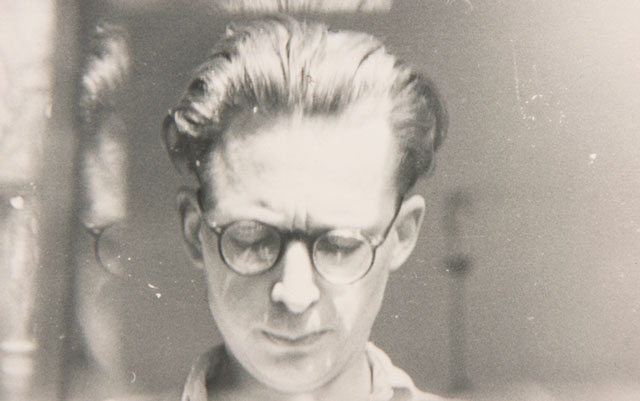
Andrzej Wróblewski, [Self-Portrait with Glass Reflection], undated. Black and white photograph, 5.2 x 8.4 cm. Archive of the Artist’s Heirs. © Andrzej Wróblewski Foundation.
Wróblewski’s art is distinctive for its powerful fusion of personal, social, and political themes, rendered through a unique combination of abstraction and figuration. One of the most notable aspects of his work is the way he approached the human figure. Rather than striving for realism, Wróblewski distorted forms to convey deep emotional states, often focusing on themes of suffering, loss, and alienation. This departure from traditional representations allowed him to evoke the psychological and existential weight of his subjects, making his paintings emotionally charged and deeply reflective of the post-war context in which he lived.
Another unique element of Wróblewski’s art was his innovative use of color and technique. He often employed stark contrasts and bold, flat colors, using them symbolically to heighten the emotional impact of his work. His layering of paint and occasional incorporation of fragmented forms contributed to a sense of dislocation or trauma, mirroring the fractured state of post-war Poland. Additionally, Wróblewski’s ability to intertwine personal experiences with broader political and historical events, such as the aftermath of World War II and the rise of socialism in Eastern Europe, gave his work a unique voice that stood out from other artists of his time. His paintings can be seen as a response to the existential questions raised by the war and its aftermath, making his art both a personal and collective statement.
In addition to his paintings, Wróblewski’s contributions to graphic arts and mural painting further demonstrate his versatility and commitment to his craft. His murals, often commissioned for public spaces, aimed to engage with a broader audience, reflecting the socio-political issues of the time. This desire to connect with the public was a hallmark of his artistic philosophy, as he believed art should provoke thought and conversation.
The War Paintings
Among Wróblewski’s most notable series is “The War Paintings,” created in the late 1940s and early 1950s. This body of work stands as a poignant exploration of human suffering during wartime. The paintings feature distorted, anguished figures caught in moments of despair, rendered in a style that blends the grotesque with the poetic. In these works, Wróblewski stripped away the romanticism often associated with war, instead presenting a raw and unfiltered view of its impact on humanity. The emotional intensity of these paintings has a haunting quality, inviting viewers to confront the darker aspects of human experience.
Break at Work in Nowa Huta
Andrzej Wróblewski’s painting Break at Work in Nowa Huta (1956) is a striking representation of industrial life in post-war Poland. The piece captures a moment of respite amidst the harsh realities of factory labor, depicting workers taking a break in the Nowa Huta steelworks—a symbol of the socialist modernization effort in Poland. Wróblewski employs bold colors and dynamic forms to convey both the physicality of labor and the emotional weight of the workers’ experiences. The juxtaposition of the figures’ weary expressions against the backdrop of machinery highlights the tension between human resilience and the dehumanizing aspects of industrialization.
In this work, Wróblewski not only reflects on the daily lives of the workers but also engages with broader themes of alienation and community. The figures, though individual and distinct, are unified in their shared experience, suggesting a collective identity forged in the crucible of industrial labor. Wróblewski’s innovative use of color and composition invites viewers to contemplate the complex relationship between people and their work environments. Break at Work in Nowa Huta stands as a poignant commentary on the socio-political landscape of the time, offering a glimpse into the struggles and aspirations of a generation defined by both hardship and hope.
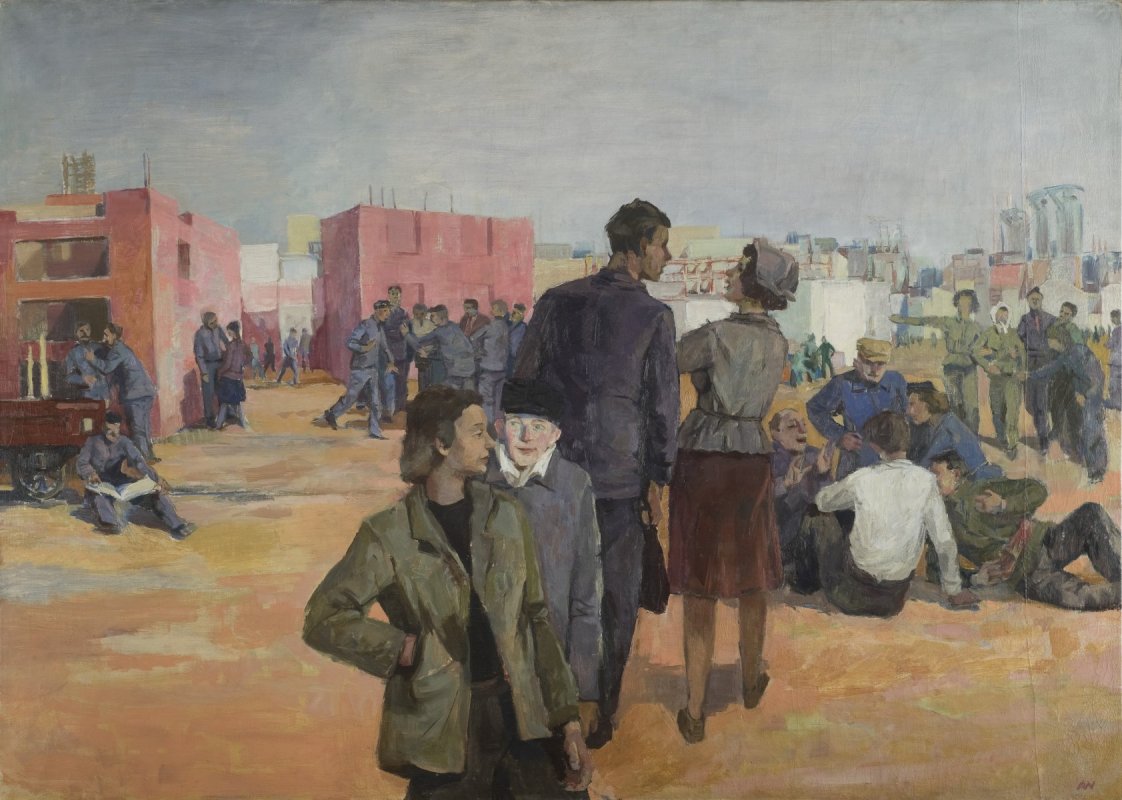
Andrzej Wróblewski, Break at Work in Nowa Huta, 1954, 140 x 198 cm, Starak Collection, © Andrzej Wróblewski Foundation
Legacy
Today, Andrzej Wróblewski is remembered not only as a masterful painter but also as a pioneer of modern Polish art. His work is celebrated in galleries and exhibitions, and his influence can be seen in the works of many contemporary artists. As we reflect on his legacy, we recognize the importance of art as a means of understanding and navigating the complexities of human experience, a testament to Wróblewski’s enduring impact on the art world.
In a time when Poland faced significant change, Andrzej Wróblewski emerged as a powerful voice, capturing the essence of a nation in turmoil while simultaneously exploring universal themes of existence. His art remains a vital part of the conversation around identity, history, and the role of the artist in society, ensuring that his legacy will endure for generations to come.
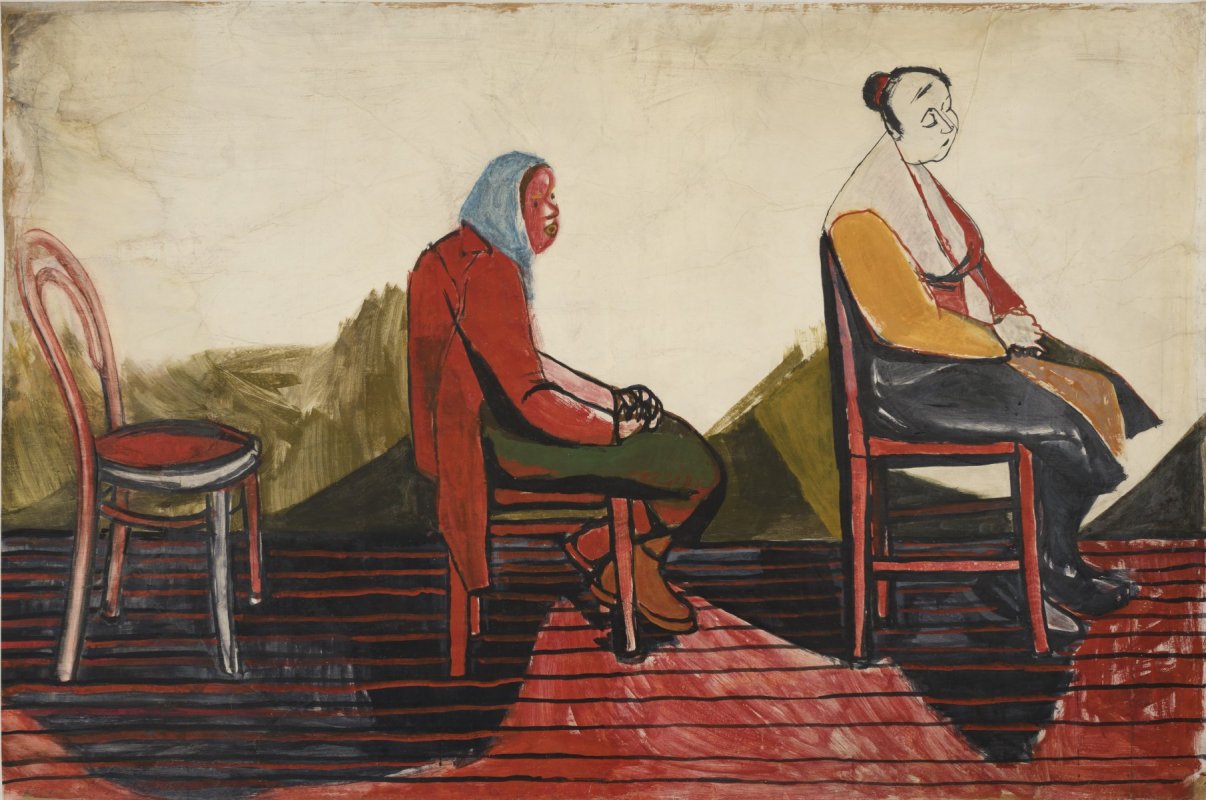
Andrzej Wróblewski, The Queue Continues; 1956; gouache, watercolour, paper, 99.6 × 150.8 cm; Starak Collection © Andrzej Wróblewski Foundation
For Further Viewing and Reading
Andrzej Wróblewski Foundation
https://www.andrzejwroblewski.pl/
Andrzej Wróblewski (1927-1957) In the First Person. Collateral Event of the 60th International Art Exhibition – La Biennale di Venezia, Starak Family Foundation.
https://starakfoundation.org/en/spectra/news/andrzej_wroblewski_1927_1957_in_the_first_person
“Andrzej Wróblewski: Patron of Rebellious Artists.”
https://zagrajwsztuke.pl/en/andrzej-wroblewski/
“Andrzej Wróblewski,” (Profile), Adam Mickiewicz Institute.
https://culture.pl/en/artist/andrzej-wroblewski
Andrzej Wróblewski. Waiting Room. Moderna galerija, Ljubljana.
https://www.mg-lj.si/en/exhibitions/3040/andrzej-wroblewski-waiting-room/
Lloyd, Joe. “Andrzej Wróblewski,” David Zwirner, London
16 March – 14 April 2018 (Review).
https://www.studiointernational.com/andrzej-wroblewski-review-david-zwirner-london
Wielebska, Kamila. “Andrzej Wróblewski at the Van Abbemuseum (Exhibition Review),” Art Margins, November 6, 2010.
https://artmargins.com/andrzej-wroblewski-van-abbemuseum/
Wróblewski, Andrzej. Andrzej Wróblewski: Exhibiting. Edited by Magdalena Ziółkowska and Wojciech Grzybała, Fundacja Andrzeja Wroblewskiego ; Hatje Cantz Verlag, 2024.
Wróblewski, Andrzej, et al. Andrzej Wróblewski: Recto/Verso. Edited by Éric de Chassey and Marta Dziewańska, Museum of Modern Art in Warsaw, 2015.
Wróblewski, Andrzej, et al. Andrzej Wróblewski: To the Margin and Back. Van Abbemuseum, 2010.
Wróblewski, Andrzej, and Moderna galerija (Ljubljana, Slovenia). Andrzej Wróblewski: Waiting Room. Edited by Magdalena Ziółkowska and Wojciech Grzybała, Hatje Cantz, 2020.

 The Projector
You must be logged in to post a comment.