
Celebrating the Anniversary of When We Were Very Young by A.A. Milne
On this day, we celebrate the anniversary of When We Were Very Young, the charming collection of poetry for children by A.A. Milne, first published in 1924. Though primarily remembered today for his beloved Winnie-the-Pooh stories, Milne’s poetic foray laid the groundwork for the Hundred Acre Wood and its residents. The whimsical verses in this book, paired with Ernest H. Shepard’s delightful illustrations, captured the imagination of readers young and old and continue to enchant generations. Let’s take a moment to explore its origins, early reception, and lasting significance.
Writing and Publication History
When We Were Very Young marked Milne’s first foray into children’s literature, though he was already a successful playwright, novelist, and humorist. The poems in the collection were written largely for his son, Christopher Robin Milne, who would later become the central figure in his famous Winnie-the-Pooh stories. Milne’s gentle, playful style drew upon his observations of his son’s innocent explorations of the world, with Christopher Robin becoming the model for several poems, including the much-loved “Buckingham Palace.”
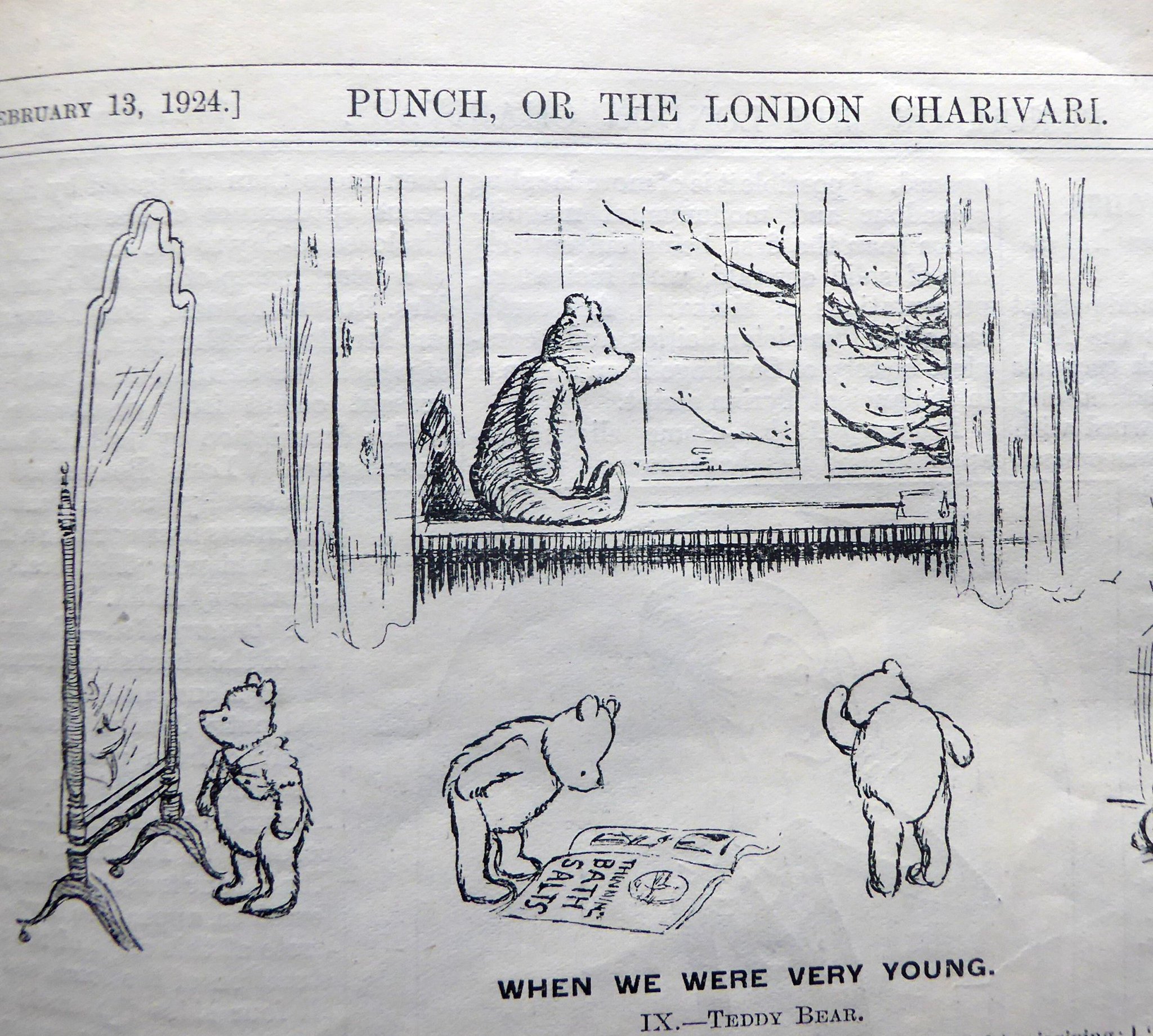
“Teddy Bear,” the original illustration from Punch, or the London Charivari, February 13, 1924.
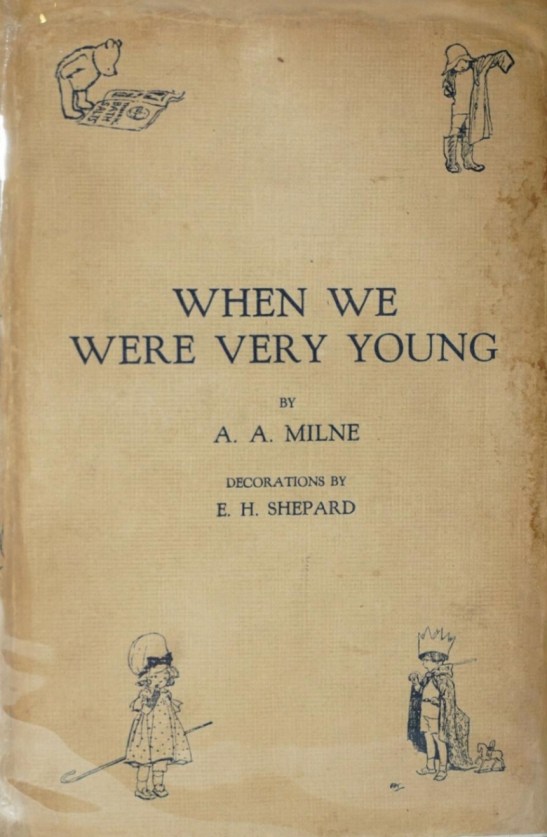
The publication of When We Were Very Young was handled by Methuen & Co. in London, with Milne collaborating closely with illustrator Ernest H. Shepard, who would go on to define the visual world of Pooh. Shepard’s delicate line drawings, often featuring Milne’s son and his stuffed toys, were perfectly attuned to the lighthearted yet profound nature of the poems.
The book became an immediate success, going through multiple printings within a few months. It was the beginning of Milne’s prolific collaboration with Shepard, which would culminate in the creation of the enduring Winnie-the-Pooh stories. For Milne, When We Were Very Young represented a shift in his career, guiding him toward the literary legacy for which he is most celebrated today.
Immediate Readership and Reception
Upon its release, When We Were Very Young was met with widespread praise. Both critics and readers were charmed by the poems’ simple yet insightful observations of childhood. At a time when much of children’s literature was either moralistic or purely educational, Milne’s verses struck a new chord by celebrating the imagination and joy of being a child without heavy-handed messages.
Readers were delighted by Milne’s blend of innocence and wit. Some of the most popular poems, such as “Disobedience” (about James James Morrison Morrison Weatherby George Dupree) and “The King’s Breakfast,” reflected everyday frustrations and joys through playful rhythms and memorable characters. These poems were lighthearted but not without a deeper, emotional resonance, which gave them a universal appeal. Milne’s work was embraced not only by children but also by parents and adults who found comfort and nostalgia in his words.
When We Were Very Young quickly climbed the bestseller lists, and its popularity showed no signs of waning. It was clear that Milne had tapped into something timeless, a literary voice that spoke to both the child and the childlike spirit in all of us.
Significance and Endurance
A century later, When We Were Very Young remains an important and beloved piece of children’s literature. Its lasting appeal lies in Milne’s ability to capture the wonder of childhood with humor and empathy. The poems, though light in tone, often touch on deeper themes such as growing up, the passage of time, and the exploration of the imagination—experiences that transcend generations.
Milne’s gentle humor and Shepard’s illustrations continue to evoke a sense of warmth and nostalgia, while also feeling fresh to new readers. The language is simple enough for children to enjoy but layered with wit and charm that adults can appreciate. This dual appeal has ensured the book’s place as a classic not only in children’s literature but also in the broader literary canon.
Moreover, the collection’s importance cannot be understated in the context of Milne’s larger body of work. The poems laid the groundwork for the characters and settings that would become integral to Winnie-the-Pooh and its sequels. Christopher Robin, already a central figure in these poems, would take on new life as the key human character in the Pooh stories. Similarly, the tone of whimsy and simplicity that pervades When We Were Very Young would carry over into Milne’s prose, shaping his distinctive narrative style.
When We Were Very Young is a testament to Milne’s unique ability to understand and articulate the thoughts and feelings of children. The book’s enduring success has ensured that it remains on the shelves of homes, schools, and libraries around the world, a touchstone of innocence and wonder that continues to inspire both young readers and those who read to them.
Conclusion
As we mark the anniversary of When We Were Very Young, we are reminded of the book’s unique place in the world of children’s literature. It is more than just a collection of charming poems; it is a window into the joys of childhood, a snapshot of a simpler time, and the starting point for one of the most beloved literary universes ever created. A.A. Milne’s verses continue to captivate and comfort, offering readers of all ages a reminder that the magic of childhood can endure long after we have grown.

 The Projector
You must be logged in to post a comment.