
An Introduction to Polish Novels: A Literary Journey
Recommending books is one of the most joyful yet challenging parts of being a professor, publisher, or avid reader. Whenever someone asks, “What should I read next?” my mind floods with titles, but I hesitate to give a definitive answer. After all, reading is deeply personal—what resonates with one person might leave another indifferent. On top of that, my own tastes shift from day to day, shaped by my mood, the season, or whatever’s on my desk that morning. Without knowing someone’s tastes, preferences, or current mood, offering a recommendation can feel like throwing darts in the dark. Instead of a one-size-fits-all answer, I believe in offering a curated range of options, allowing readers to discover what speaks to them most.
In recent months, I’ve often asked about where an individual might be started on books by Polish authors. For once, I thought I might take a few tries at this: this could make a nice transition out of my Polish American history series (though I hope to come back at this at some point) and an interesting springboard to end the year as folks perhaps have more reading time over the holidays or try to build reading into their New Year’s resolutions. Polish literature is a treasure trove of novels that reflect the nation’s history, cultural identity, and universal human experiences. As much as it pains me to do so, I’ve limited my list here to novels written after 1800 that are also easily accessible in English language translation. I also tried to limit the list to one entry for each author and tried to represent several eras, styles, and themes . . . Here it is.
The Manuscript Found in Saragossa
(Rękopis znaleziony w Saragossie) (1805)
by Jan Potocki
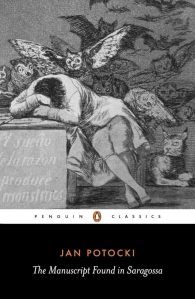
This fantastical and labyrinthine novel is a frame story involving Alphonse van Worden, a Walloon officer who journeys through the Sierra Morena mountains. Along the way, he encounters enigmatic figures, supernatural occurrences, and tales-within-tales that interweave mysticism, philosophy, and adventure. A masterpiece of early modern European literature, it explores themes of cultural diversity, skepticism, and the nature of storytelling itself.
Pan Tadeusz (1834)
by Adam Mickiewicz
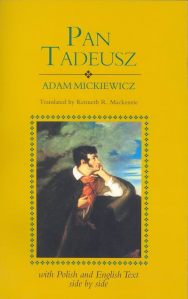
This epic poem, written in verse, captures the life of Polish gentry in the early 19th century. Set against the backdrop of Napoleonic Europe, it follows two feuding noble families and their reconciliation, blending humor, nostalgia, and patriotism. Often considered Poland’s national epic, Pan Tadeusz reflects the nation’s longing for independence and unity.
Marta (1873)
by Eliza Orzeszkowa
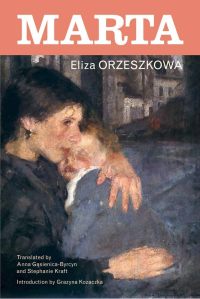
This novel tells the story of Marta Świcka, a widow struggling to provide for her daughter in a patriarchal and capitalist society. Faced with insurmountable challenges, her journey critiques the societal expectations placed on women. A pioneering feminist work, it addresses gender inequality and the economic hardships faced by women in the 19th century.
The Doll (Lalka)
by Bolesław Prus (1890)
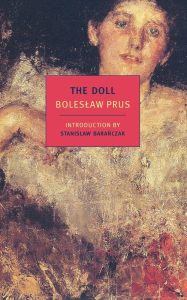
A cornerstone of Polish realism, The Doll focuses on the life of Stanisław Wokulski, a self-made man torn between his unrequited love for the aristocratic Izabela Łęcka and his ambitions in a changing society. The narrative also delves into the lives of Warsaw’s diverse social classes. The novel explores themes of love, ambition, and the decline of the Polish nobility, offering a panoramic view of 19th-century society.
The Coming Spring
(Przedwiośnie) (1925)
by Stefan Żeromski
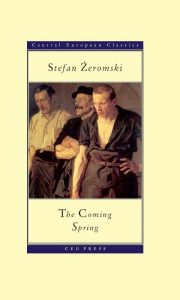
This novel follows Cezary Baryka, a young man who returns to a newly independent Poland after World War I. Torn between differing visions for the nation’s future, he struggles to find his place amidst the political and social upheaval. A critical exploration of post-war Poland, it interrogates the clash between utopian ideals and harsh realities.
Boundary
(Granica) (1935)
by Zofia Nałkowska
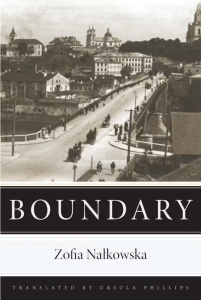
Boundary examines the life of Zenon Ziembiewicz, a man whose moral compromises lead to personal and societal collapse. The narrative shifts perspectives, revealing the interconnected lives of characters affected by his actions. This modernist novel probes the limits of moral responsibility and the complexities of human relationships.
Ferdydurke (1937)
by Witold Gombrowicz

A surreal and satirical novel, Ferdydurke follows Józio, a 30-year-old man forcibly returned to adolescence by an absurd conspiracy. Through bizarre and comical scenarios, Gombrowicz critiques societal norms and the process of identity formation. A landmark in Polish modernism, the novel challenges traditional notions of maturity and individuality.
Ashes and Diamonds
(Popiół i diament) (1948)
by Jerzy Andrzejewski
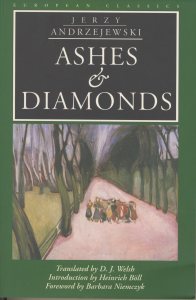
Set in the immediate aftermath of World War II, this novel follows Maciek Chełmicki, a young resistance fighter torn between duty and personal desires as Poland transitions to a communist regime. The narrative captures the moral ambiguities of his choices. A poignant exploration of loyalty, sacrifice, and political change, it remains a powerful commentary on Poland’s post-war identity.
Solaris (1961)
by Stanisław Lem
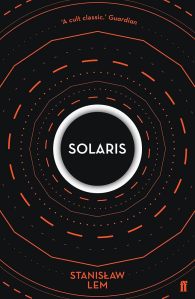
A classic of science fiction, Solaris centers on Kris Kelvin, a psychologist sent to study the mysterious oceanic planet Solaris. As the planet manifests his subconscious memories, he grapples with love, guilt, and the limits of human understanding. Beyond its sci-fi framework, Solaris is a profound philosophical exploration of human nature and the challenges of truly knowing the “other.”
Flights
(Bieguni) (2007)
by Olga Tokarczuk

A fragmented and thought-provoking narrative, Flights examines the human compulsion for movement and the body’s physicality. The novel weaves together stories of modern travelers and historical figures, creating a kaleidoscope of experiences. Winner of the 2018 Man Booker International Prize, Flights captures the fluidity of identity and the interconnectedness of human lives.
As I finish this post, it already pains me not to include several other novels and I’m already questioning one or two on this list. Meanwhile, I have so much more to say about several other entries here: Can 2-3 sentences really do any of them justice or satisfy how I feel about them? Perhaps another post for another day . . . As the title of this blog states, this is an introduction, one possible entry for those who want to get started somewhere. I think these ten novels exemplify the depth and versatility of Polish literature, capturing the spirit of different eras while engaging with timeless themes. From the romantic patriotism of Pan Tadeusz to the sci-fi philosophical musings of Solaris and the fragmented modernity of Flights, each work reflects a strand of Polish history, culture, and thought. For readers seeking stories that transcend borders and resonate universally, Polish literature offers a surplus of masterpieces. And these are just a few…
For a more extensive list (and slightly different opinions), I’d suggest visiting the following sites:
“The Greatest Polish Books of All Time,” The Greatest Books.
“11 Great Polish Books You Have to Read” by Mikołaj Gliński, Adam Mickiewicz Institute, Culture.pl.
“Nine Polish Books You Must Read Before You Die,” Notes from Poland.
“The Five Best Books Translated from Polish” by Antonia Lloyd-Jones, The Guardian, 5 September 2024.
“10 Best Polish Books You Must Read,” Meet the Slavs.

 The Projector
You must be logged in to post a comment.