
Celebrating 40 Years of Tetris: A Timeless Classic in Gaming History
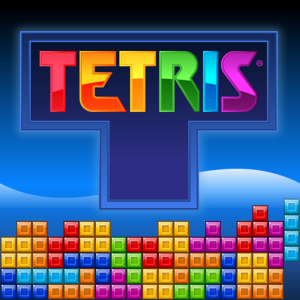
This year marks a milestone for Tetris, one of the most beloved video games of all time, as it celebrates its 40th anniversary. First created on June 6, 1984, by Alexey Pajitnov, a computer scientist in the Soviet Union, the game has become a universal symbol of creativity and accessibility in gaming. Tetris started as a simple side project on an Electronika 60 computer but quickly spread beyond the Iron Curtain to capture the imaginations of millions worldwide. Its minimalist gameplay—rotating and arranging falling Tetriminos to complete lines—struck a chord across cultures, ages, and generations.
The Humble Beginnings of a Global Phenomenon
Pajitnov designed Tetris during his spare time at the Moscow Academy of Science. Inspired by his love of puzzles and a pentomino board game, he simplified the concept to make it work on limited hardware. The name “Tetris” combines the Greek prefix “tetra,” meaning four, with Pajitnov’s favorite sport, tennis. From its inception, the game’s charm lay in its simplicity: an intuitive yet challenging concept that players could pick up immediately but strive to master endlessly.
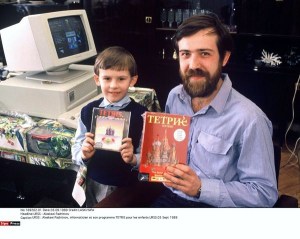
“Tetris designer Alexey Pajitnov and son holding early copies of the PC version of Tetris,” ©Sipa Press, 1989. Found at https://www.computerhistory.org/revolution/computer-games/16/197/832.
However, its journey to global fame wasn’t straightforward. During the Cold War, intellectual property in the USSR was considered state-owned, which created complications when Pajitnov’s creation caught the attention of software developers abroad. Henk Rogers, a Dutch video game designer and entrepreneur, eventually secured the licensing rights for Nintendo’s Game Boy in 1989, propelling Tetris into mainstream popularity. By bundling Tetris with the Game Boy, Nintendo ensured the console’s success and made Tetris synonymous with portable gaming.
Enduring Popularity Across Generations and Platforms
From its release on the Game Boy to its presence on modern smartphones, Tetris has remained relevant for four decades. It has been ported to nearly every gaming platform imaginable, including consoles, PCs, handheld devices, and arcade machines. The addictive gameplay, combined with its universal accessibility, ensures that Tetris continues to resonate with players of all skill levels.

The game’s psychological appeal is well-documented. The satisfaction of completing lines triggers a sense of accomplishment, while its increasingly faster pace challenges spatial reasoning and quick decision-making. This balance of simplicity and complexity is often cited as the reason Tetris is considered a near-perfect game design. Studies have even shown that playing Tetris can reduce stress and improve cognitive skills, further enhancing its reputation as more than just a pastime.
Over the years, Tetris has adapted to the changing landscape of gaming. The critically acclaimed Tetris Effect (2018) added mesmerizing visuals and a dynamic soundtrack, creating a meditative gaming experience. Meanwhile, Tetris 99 (2019) introduced competitive multiplayer mechanics, showcasing the game’s adaptability to modern trends like battle royale formats.
Cultural Legacy and Influence
Tetris has had a profound impact on the gaming industry, inspiring countless titles and shaping the puzzle game genre. Its simple yet addictive gameplay, which revolves around arranging falling blocks to clear lines, influenced not just other puzzle games like Dr. Mario and Lumines, but also broader game design principles. The game’s use of patterns and the reward system of clearing multiple lines became a standard in many future titles. Additionally, its success in the handheld gaming market with the Game Boy established portable gaming as a viable platform, paving the way for games on mobile devices. As noted by experts, Tetris also helped define the concept of “casual gaming,” appealing to a wide audience regardless of age or gaming experience. Its lasting influence can still be seen in the success of games like Candy Crush Saga and Bejeweled, which share similar mechanics of pattern recognition and progression.
Beyond gaming, Tetris has influenced art, psychology, and popular culture. Its simple yet iconic visuals, including the brightly colored Tetriminos, have inspired countless adaptations, merchandise, and even architectural light shows. The “Tetris Effect,” a phenomenon where players see falling blocks in their mind after long gaming sessions, has become a well-known cultural reference and even a topic of psychological study.
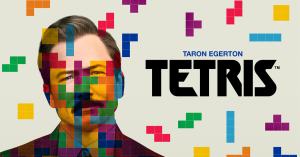
In the 1980s and 1990s, Tetris also became a symbol of East-West collaboration during the Cold War, breaking political and cultural barriers. Its global reach has since turned it into a shared cultural touchstone, uniting players from different backgrounds through a common experience. And for those who missed it—and I did until reviewing articles for this blog—in 2023, Apple Original Films produced the movie Tetris, which focuses on the true story behind the game’s rise to global fame during the Cold War. It follows Henk Rogers, played by Taron Egerton, who partners with Russian inventor Alexey Pajitnov to bring the game from the Soviet Union to the West, navigating complex legal and political obstacles.
The Future of Tetris
As Tetris celebrates its 40th anniversary, its legacy shows no signs of slowing down. The Tetris Company, now led by Maya Rogers, daughter of Henk Rogers, is committed to keeping the brand fresh and innovative. New iterations and collaborations are constantly in development, exploring cutting-edge technologies like augmented reality and virtual reality to bring Tetris to new audiences.

One tribute to 40 years of Tetris is Tetris Forever. Developed by Digital Eclipse as part of their Gold Masters Series, this collection includes over 15 versions of Tetris, showcasing the evolution of the beloved puzzle game. From a recreation of Alexey Pajitnov’s original Soviet-era version on the Electronika 60 to unique iterations like Tetris Battle Gaiden, the compilation features rare and global versions of the game. Additionally, a new twist called Tetris Time Warp introduces dynamic gameplay, switching between Tetris formats in real-time.
Beyond gameplay, Tetris Forever serves as an interactive museum with over an hour of documentary footage chronicling Tetris‘ creation, its journey through global gaming culture, and its impact. The project emphasizes game preservation, offering access to rare titles and ensuring Tetris remains timeless. Released in November 2024, Tetris Forever is a nostalgic and educational experience for fans old and new. It is available on several platforms, including Atari, Play Station, Xbox, Nintendo Switch, and Windows.
Tetris is not just a game: it’s a cultural icon and a historic artifact. And it’s a testament to the power of simplicity, creativity, and universal design. Its enduring appeal lies in its ability to transcend time and technology, remaining a favorite across generations. As we look ahead, the story of Tetris is far from over; it’s a legacy in motion, continually evolving to connect people worldwide.
For Further Reading
Ackerman, Dan. The Tetris Effect : The Game That Hypnotized the World. First edition. New York: PublicAffairs, 2016.
Agren, Thomas et al. “The Neural Basis of Tetris Gameplay: Implicating the Role of Visuospatial Processing.” Current psychology (New Brunswick, N.J.) 42.10 (2023): 8156–8163. Web.
Asselbergs, Joost et al. “The Effectiveness of Two Novel Approaches to Prevent Intrusions: A Pilot Study Comparing Tetris_dualtask and Imagery Rescripting to Control.” Journal of behavior therapy and experimental psychiatry 82 (2024): 101920-. Web.
Belchior, Patrícia et al. “Video Game Training to Improve Selective Visual Attention in Older Adults.” Computers in Human Behavior 29.4 (2013): 1318–1324. Web.
Berry, Jacquelyn H. “Zone In Not Out! The Key to Winning High-Level Tetris.” Perceptual and motor skills 131.6 (2024): 2304–2323. Web.
Bogost, Ian. Play Anything: The Pleasure of Limits, the Uses of Boredom, and the Secret of Games. Basic Books, 2016.
Deyell, Freya. “Tetris Celebrates 40 Years with an ‘Interactive Museum’ Collection on Switch,” ReadWrite, 27 August 2024, www.readwrite.com/tetris-forever-announced-release-window-nintendo-switch-2024/.
James, Ella L et al. “Can Playing the Computer Game ‘Tetris’ Reduce the Build-Up of Flashbacks for Trauma? A Proposal from Cognitive Science.” PLoS ONE 4.1 (2009): e4153–e4153. Web.
Lau‐Zhu, Alex et al. “Selective Association Between Tetris Game Play and Visuospatial Working Memory: A Preliminary Investigation.” Applied cognitive psychology 31.4 (2017): 438–445. Web.
MacDonald, Keza. “Tetris Forever Is the Real Story of Tetris, and It’s Fascinating.” The Guardian, 13 Nov. 2024, www.theguardian.com/games/2024/nov/13/tetris-forever-is-the-real-story-of-tetris-and-its-fascinating.
“Nintendo Game Boy: Gaming Hit in America, 1989.” NPR, 31 July 2024, https://www.npr.org/2024/07/31/nx-s1-4877124/nintendo-game-boy-gaming-hit-in-america-1989.
Noah, J. Adam et al. “Changes in Sympathetic Tone During Cooperative Game Play.” Social behavior and personality 43.7 (2015): 1123–1134. Web.
Purslow, Matt. “Tetris Forever: A Collection of Tetris History Announced for Nintendo Switch.” IGN, 27 August 2024, www.ign.com/articles/tetris-forever-a-collection-of-tetris-history-announced-for-nintendo-switch.
“Tetris Beat: A Blue Scuti Creation.” The New York Times, 3 Jan. 2024, https://www.nytimes.com/2024/01/03/arts/tetris-beat-blue-scuti.html.
Tetris. “Tetris 40th Anniversary.” Tetris.com, https://tetris.com/topic/tetris-40th-anniversary.
“Tetris 40 Years.” Tetris40Years.com, https://tetris40years.com/.
Wang, Meng, and Haipeng Mi. “Tangible Tetris.” Leonardo (Oxford) 52.2 (2019): 182–183. Web.
Watercutter, Angela. “Why Everyone Is Obsessed With the Kid Who Beat Tetris.” Wired, 5 January 2024, www.wired.com/2024/01/03/why-everyone-obsessed-tetris-kid.


 The Projector
You must be logged in to post a comment.