
An Introduction to Polish Poetry
Polish poetry holds a unique and powerful place in the global literary canon. Rooted in a history marked by upheaval, resilience, and an enduring search for identity, Polish poets have given voice to the collective and individual experiences of their people. From the harrowing realities of war to the exploration of existential questions, Polish poetry continues to resonate with universal themes while being deeply personal and historically contextualized.
In the previous weeks, I offered my introductory list of Polish novels. It’s always difficult creating these lists, largely because of all the incredible works and artists who didn’t make it onto the list that day . . . In all of my decision-making for that post, I decided it would be easiest to avoid the poetry genre altogether. So here it is: my list of seven Polish poets whose works have shaped this remarkable tradition.
Why seven? This gives you a chance to look at one poet a day for a week. For anyone who’s familiar with Polish Literature, I don’t think this list will be too surprising or offer much controversy. Again, I could have selected so many others here–I have to say it pains me to limit to seven–but this is my introductory list for those unfamiliar with Polish literature. I think this offers a good place to begin.
Wisława Szymborska (1923-2012)
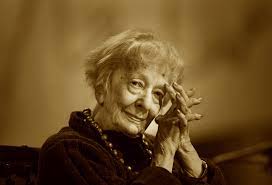
Wisława Szymborska, awarded the Nobel Prize in Literature in 1996, is one of Poland’s most celebrated poets. Known for her philosophical musings and understated wit, Szymborska’s poetry delves into themes of human existence, history, and the natural world. Her verse often combines simplicity with profound insight, offering readers a fresh perspective on everyday life.
Born in Prowent, Poland, Szymborska’s early work was influenced by Poland’s turbulent history, including World War II and the communist era. In later years, her poetry embraced a more universal scope, reflecting on the mysteries of existence with humor and skepticism. Notable works include View with a Grain of Sand and Nothing Twice, where her style’s clarity and precision shine.
Sample poems:
The Onion
Some People
Love at First Sight
Czesław Miłosz (1911-2004)
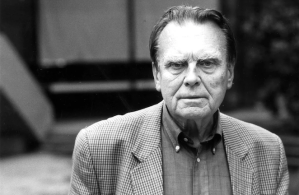
Czesław Miłosz, another Nobel laureate (1980), was a poet, essayist, and translator whose work is marked by an unflinching confrontation with history and morality. Born in Lithuania and later exiled to the United States, Miłosz’s poetry often explores themes of displacement, memory, and the search for spiritual and ethical meaning.
Miłosz’s seminal works, such as The Captive Mind and The Issa Valley, reflect his intellectual depth and his engagement with the moral dilemmas of the 20th century. His poetry, including collections like Rescue and New and Collected Poems, is both deeply personal and universal, grappling with the intersections of faith, politics, and humanity.
Sample poems:
A Song on the End of the World
Gift
Encounter
Zbigniew Herbert (1924-1998)
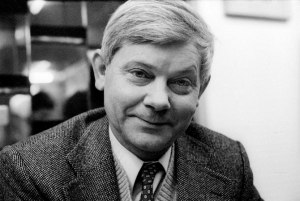
Zbigniew Herbert’s poetry embodies the resilience of the human spirit in the face of political oppression and existential despair. A key figure in Poland’s post-war literary scene, Herbert’s work often juxtaposes classical motifs with contemporary struggles.
Born in Lwów (now Lviv, Ukraine), Herbert witnessed the horrors of World War II and its aftermath, experiences that profoundly shaped his poetry. His Mr. Cogito series is a hallmark of his oeuvre, presenting a philosophical and ironic everyman who reflects on the absurdities and tragedies of life. Herbert’s work is celebrated for its moral clarity and rich allusions to history and art.
Sample poems:
The Envoy of Mr. Cogito
Report from the Besieged City
Pebble
Tadeusz Różewicz (1921-2014)
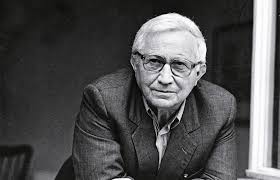
Tadeusz Różewicz’s poetry is stark and minimalist, reflecting the disillusionment and trauma of a generation ravaged by World War II. Born in Radomsko, Różewicz served in the Polish resistance during the war, an experience that deeply influenced his literary voice.
Różewicz’s work strips poetry to its bare essentials, often rejecting traditional forms and meter. His collections, such as Anxiety and Recycling, grapple with themes of loss, alienation, and the fragility of human existence. His style’s raw honesty and experimental nature have left a lasting impact on Polish literature.
Sample poems:
Pigtail
Survivor
In the Middle of Life
Adam Zagajewski (1945-2021)

Adam Zagajewski is often associated with the “New Wave” movement in Polish poetry, which emerged in the 1970s as a response to political repression. Born in Lwów and later exiled to the United States, Zagajewski’s work blends lyrical beauty with intellectual rigor.
His poetry, characterized by its introspective and meditative qualities, explores themes of memory, exile, and the search for transcendence. Notable collections include Mysticism for Beginners and Without End: New and Selected Poems, where he reflects on the interplay between the mundane and the sublime. Zagajewski’s celebrated poem “Try to Praise the Mutilated World” captures the delicate balance of hope and despair.
Sample poems:
Try to Praise the Mutilated World
Self-Portrait
To Go to Lvov
Anna Świrszczyńska (1909-1984)
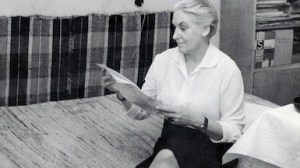
Anna Świrszczyńska’s poetry is deeply rooted in her experiences during World War II, particularly her time as a nurse during the Warsaw Uprising. Her verse is unflinching in its depiction of human suffering, yet it also celebrates resilience and the quiet dignity of everyday life.
Born in Warsaw, Świrszczyńska’s later works, such as Building the Barricade, provide a harrowing account of war from a female perspective. Her poetry often addresses themes of gender, mortality, and the physicality of human existence, with a style that is both direct and evocative.
Sample poems:
The Second Madrigal
Happy as a Dog’s Tail
The Sea and the Man
Julian Tuwim (1894-1953)

Julian Tuwim was a leading figure of the Skamander group, a circle of poets dedicated to modernizing Polish literature in the interwar period. Known for his linguistic virtuosity and humor, Tuwim’s poetry captures the vibrancy and contradictions of urban life.
Born in Łódź, Tuwim’s work often oscillates between light-hearted, satirical verse and more somber reflections on human vulnerability. His famous poem The Locomotive remains a beloved classic of Polish children’s literature, while his more introspective works explore themes of identity, alienation, and social injustice.
Sample poems:
The Locomotive
Wife
The Common Man
Polish poetry, rich in diversity and depth, reflects the nation’s complex history and the resilience of its people. From the contemplative insights of Wisława Szymborska to the moral clarity of Zbigniew Herbert, each poet brings a unique voice to the tapestry of Polish literature. Their works continue to inspire and challenge readers, offering a window into the human condition through the lens of Polish experience.
Keep reading!

 The Projector
You must be logged in to post a comment.