
Rediscovering Jutta Hipp: A Jazz Pioneer
My last post shared It’s a Long Commute a fun weekly listening project I’ve been sharing for the past 8-9 months via social media. It’s been wonderful to listen to songs I haven’t heard in a while, and listening to albums all the way through has also meant hearing the occasional song for the first time. In my fifth week into the project, I got a fun surprise: not just a new song, but a new artist! Since that introduction, I’ve done my usual research and have probably listened to every song available online at least once and a couple of albums have become regulars in recent playlists. Today, I just wanted to take a minute to spotlight jazz pianist and composer, Jutta Hipp.
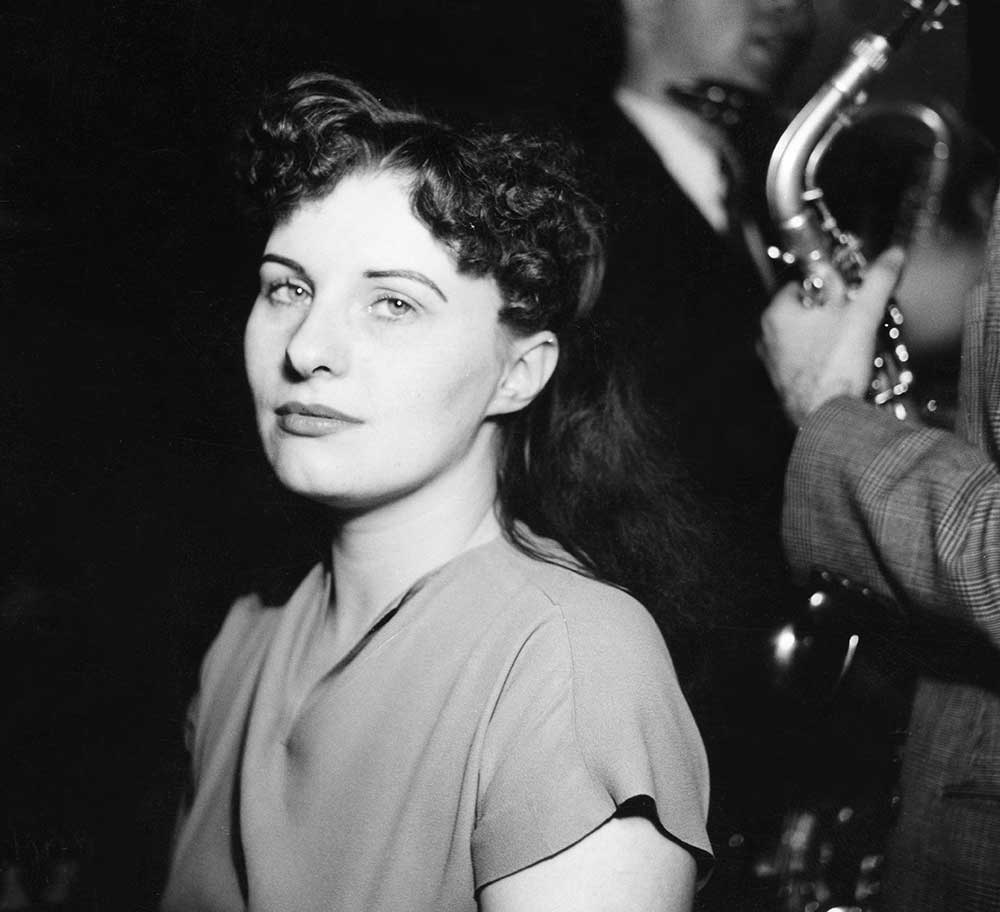
Jutta Hipp was a groundbreaking German pianist and composer whose career, though brief, left an indelible mark on the jazz landscape. Born on February 4, 1925, in Munich, Hipp’s musical journey began in a post-war Germany that was ripe for cultural rebirth. By the early 1950s, she had established herself in Frankfurt, where her innovative style and virtuosic talent caught the attention of the burgeoning jazz scene. Hipp became one of the first female jazz musicians to gain recognition in a predominantly male-dominated genre, recording several albums for the prestigious Blue Note label before her sudden withdrawal from the music world in 1960.
Hipp’s music is characterized by a unique blend of influences, drawing from the rich traditions of European classical music and the improvisational spirit of American jazz. Her playing style is often described as lyrical and introspective, marked by intricate harmonies and a deep sense of rhythm. Unlike many of her contemporaries, Hipp’s approach to jazz was not solely about technical prowess; she infused her performances with emotional depth and a sense of storytelling. This quality is particularly evident in her interpretations of standards, where she would often take familiar melodies and transform them into something fresh and evocative.


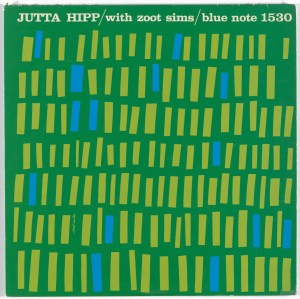
One of the defining features of Hipp’s music is her use of space and silence. She had an uncanny ability to create tension and release within her compositions, allowing moments of quiet reflection to punctuate her more exuberant passages. This technique not only showcased her technical skill but also highlighted her understanding of jazz as a dynamic conversation between musicians. In her recordings, such as “Jutta Hipp with Zoot Sims,” listeners can hear her deft interplay with other musicians, particularly the legendary saxophonist Zoot Sims, whose playful improvisations complement Hipp’s more contemplative style.
Hipp’s compositions often reflect her European roots, incorporating elements of classical music and even folk traditions. This fusion of styles is particularly evident in her original works, where she seamlessly blends complex chord progressions with jazz rhythms. Tracks like “The Girl from Ipanema” and “A Night in Tunisia” are transformed under her hands, revealing new dimensions and emotional layers. Her ability to reinterpret these standards speaks to her deep understanding of the jazz idiom and her desire to push its boundaries.
Despite her talent and the acclaim she received during her career, Hipp’s decision to step away from the spotlight in the early 1960s remains a point of intrigue. After recording a series of albums that showcased her unique voice, she retreated from public performance and eventually moved to New York City, where she lived a reclusive life. This self-imposed exile has led to much speculation about her motivations, with some suggesting that the pressures of the music industry and the challenges of being a female artist in a male-dominated field contributed to her withdrawal.
Hipp’s legacy is one of quiet resilience and artistic integrity. While she may not have achieved the same level of fame as some of her contemporaries, her contributions to jazz have been increasingly recognized in recent years. Her recordings have been reissued and celebrated by a new generation of listeners, who are drawn to her unique sound and the emotional depth of her music. Critics and historians alike have begun to reassess her place in the jazz canon, acknowledging her as a pioneering figure who paved the way for future female musicians. Her innovative approach to jazz, characterized by a blend of classical influences and a deep emotional resonance, continues to inspire musicians and listeners alike. As we reflect on her legacy, it is clear that Hipp’s contributions to the jazz world are not only significant but also essential to understanding the evolution of the genre. Her story serves as a reminder of the importance of recognizing and celebrating the voices of those who have shaped the musical landscape, even if they have chosen to step back from the limelight. In a world that often overlooks the contributions of women in music, Jutta Hipp stands as a shining example of talent, creativity, and the enduring spirit of jazz.

Selected Discography
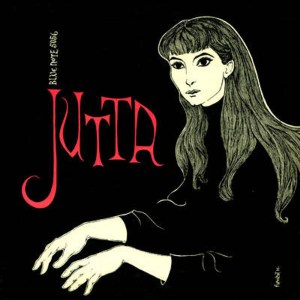
1. New Faces – New Sounds from Germany (1954)
- Recording Date: April 24, 1954
- Label: Blue Note
- Personnel: Jutta Hipp (piano), Hans Kresse (bass), Karl Sanner (drums); with Emil Mangelsdorff (alto sax) and Joki Freund (tenor sax) on select tracks.
- Notes: Released as a 10-inch LP.
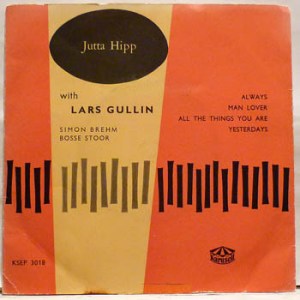
2. Jutta Hipp with Lars Gullin (1955)
- Recording Date: January 1955
- Label: Karusell
- Personnel: Jutta Hipp (piano), Lars Gullin (baritone sax), Simon Brehm (bass), Bosse Stoor (drums).
- Notes: Released as an EP; reissued as part of the Lars Gullin CD 1954/55 Vol 3 Late Summer (Dragon).
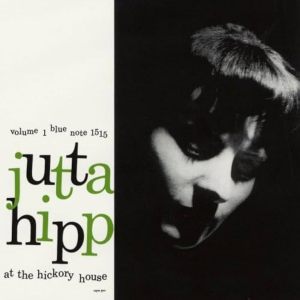
3. At the Hickory House Volume 1 (1956)
- Recording Date: April 1956
- Label: Blue Note
- Personnel: Jutta Hipp (piano), Peter Ind (bass), Ed Thigpen (drums).
- Notes: Live trio recording at the Hickory House in New York City.
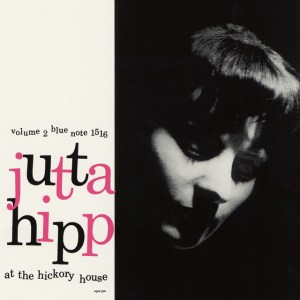
4. At the Hickory House Volume 2 (1956)
- Recording Date: April 1956
- Label: Blue Note
- Personnel: Same as Volume 1.
- Notes: Continuation of the live session from Volume 1.
5. Jutta Hipp with Zoot Sims (1957)
- Recording Date: July 1956
- Label: Blue Note
- Personnel: Jutta Hipp (piano), Zoot Sims (tenor sax), Jerry Lloyd (trumpet), Ahmed Abdul-Malik (bass), Ed Thigpen (drums).
- Notes: Studio recording featuring saxophonist Zoot Sims.
6. The German Recordings 1952–1955 (2012)
- Recording Dates: November 1952 – June 1955
- Label: Jazz Haus
- Personnel: Various, including Franz “Shorty” Roeder (bass), Karl Sanner (drums), Hans Koller (tenor sax), Albert Mangelsdorff (trombone), Joki Freund (tenor sax), Attila Zoller (guitar), Harry Schell (bass).
- Notes: Compilation of live recordings in various ensemble settings.

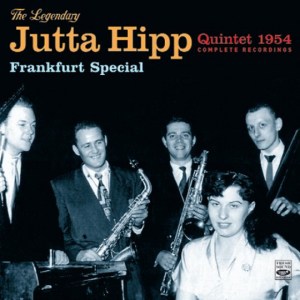
7. The Legendary Jutta Hipp Quintet: Frankfurt Special – 1954 (2006)
- Recording Dates: April – July 1954
- Label: Fresh Sound
- Personnel: Emil Mangelsdorff (alto sax), Joki Freund (tenor sax), Hans Kresse (bass), Karl Sanner (drums).
- Notes: Compilation of German recordings from 1954.

 The Projector
You must be logged in to post a comment.