
The Artworks I Think About: Edward Wadsworth’s Vorticist Study (1914)
This is the start of a new series of blog posts where I explore artworks that have stayed with me over time. These pieces, whether encountered in person, through textbooks, or online, have left a lasting impression. My first entry into this series is Edward Wadsworth’s Vorticist Study (1914), an example of Vorticism—an energetic, London-based art movement (c. 1910s) that sought to capture the dynamism of modern life.’
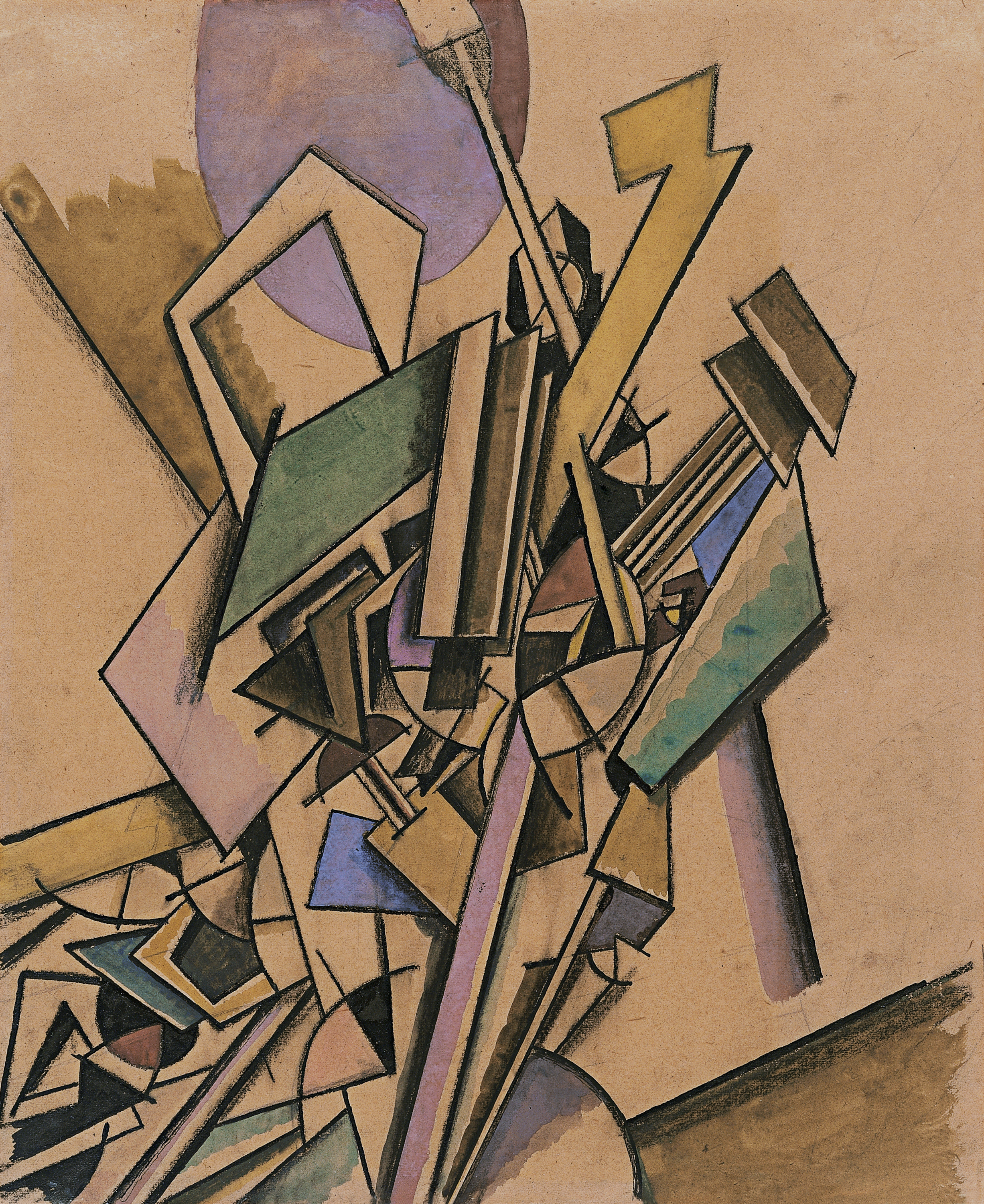
©Estate of Edward Wadsworth. Provenance: Museo Nacional Thyssen-Bornemisza, Madrid”.
Vorticist Study (1914)
Edward Wadsworth
Ink, chalk, watercolor and gouache on Paper.
33.6 x 27.3 cm
Museo Nacional Thyssen-Bornemisza, Madrid
Edward Wadsworth and Vorticism
 Edward Wadsworth was a British painter and printmaker known for his involvement in the Vorticist movement. Emerging in the early 20th century, Vorticism was founded by Wyndham Lewis and deeply influenced by the machine age. The movement sought to break from the sentimental and pastoral styles of the past, favoring angular, abstract forms and a sense of mechanical power. It’s works are characterized by its use of geometric shapes, sharp lines, and a vibrant energy that mirrored the industrial era.
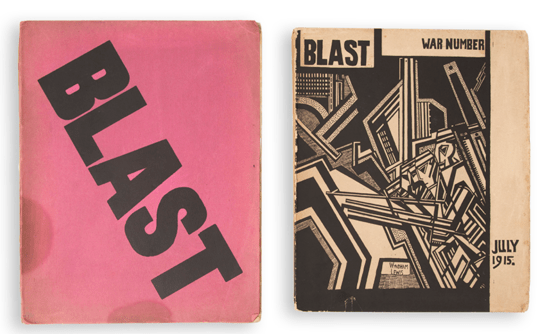
Wadsworth’s contributions to Vorticism were both artistic and intellectual. He participated in the publication of Blast, the movement’s influential literary magazine. His works often reflected the movement’s fascination with machinery and urban landscapes. Vorticist Study exemplifies these ideals, showcasing his mastery of abstract composition and his ability to capture movement and force through form.
Description and Context of Vorticist Study
Vorticist Study (1914) is a striking composition, dominated by angular and intersecting shapes. Using a muted palette of earthy tones, punctuated with vibrant greens, blues, and yellows, Wadsworth creates a sense of tension and motion. The fragmented geometric forms, layered upon one another, suggest a collision of mechanical elements or the bustling energy of a modern cityscape.
The artwork reflects the influence of Cubism and Futurism, yet it possesses a distinct sense of vigor that sets it apart. While Cubists often analyzed form from multiple perspectives, Vorticists injected their works with a more aggressive, dynamic spirit. Vorticist Study captures this energy through its bold lines and jagged edges, almost as if the forms are propelling forward.
Created on the brink of World War I, the painting also reflects the anxieties and exhilarations of a rapidly changing world. The industrial age brought advancements and upheavals, and Vorticism embraced this duality—both celebrating modern progress and questioning its consequences. Wadsworth’s work is a testament to this complex relationship between art, technology, and society.
What draws me to Vorticist Study is its energy. The shapes seem locked in perpetual motion, challenging viewers to navigate the chaotic yet meticulously composed scene. I can feel the ceaseless hum of city life, the clang of machinery, and the pulse of human activity. Sharp, off-centered, angled, forms captures a sense of urgency that resonates even today.
The piece invites contemplation on the role of art in turbulent times. Though short-lived, Vorticism responded directly to modernity of its world. In its fractured forms, I see both the excitement of technological innovation and the foreboding tension of impending conflict. This duality serves as a reminder of how artists can channel societal change into creative expression.
Vorticist Study remains significant not just as a historical artifact, but as a testament to the resilience and adaptability of artistic vision. Wadsworth’s work challenges us to confront the complexities of modernity. And, for me, with these complexities, there is also community.
Vorticism thrived as a close-knit community of artists and writers who embraced modernism in both form and spirit. Figures like Wyndham Lewis, Ezra Pound, and Henri Gaudier-Brzeska contributed to the movement’s intellectual foundation, using Blast as a platform to voice their artistic philosophies. Together, they forged a collective identity that celebrated innovation and defiance, leaving a lasting mark on the trajectory of modern art.
Stay tuned for the next installment in this series, where I’ll explore another artwork.

 The Projector
You must be logged in to post a comment.