
Ink, Paper, Pressure: Exploring Materiality in a 30-Minute Creation Sprint
In a follow-up to our digital creation challenge, I led my Digital Textuality students in a 30-minute analog version focused on materiality, improvisation, and the tactile dimensions of composition. While the previous exercise asked students to produce expressive digital texts under time pressure, this shorter sprint grounded us in the physical world. Students were given (or encouraged to bring) a small assortment of unexpected, random materials—scraps, packaging, old receipts, string, paper, tape, pens, and other found objects. The only rule: no digital tools, and no overthinking. Just thirty minutes to create something with what was on hand.
The goal was to challenge our usual habits of production and think critically about how meaning can emerge from texture, weight, touch, and improvisation. Could these raw materials—often ephemeral or discarded—take on symbolic or expressive weight when placed in new contexts?
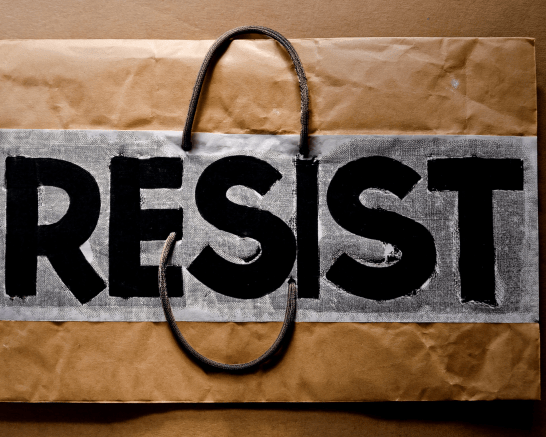
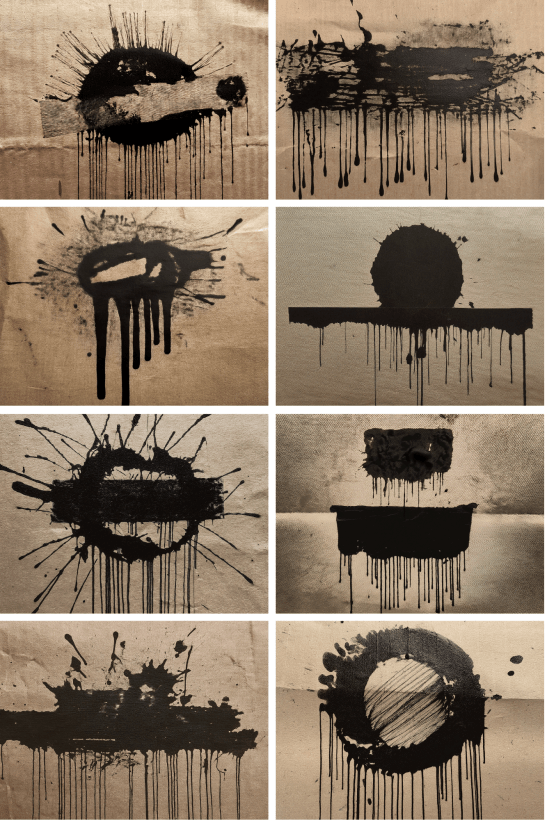
For my own creation, I worked with a stack of recycled brown paper grocery bags. Using ink, water, and pressure, I created a series of abstract blots and impressions that gradually began to resemble protest posters, resistance icons, and dystopian street imagery. The prints were spontaneous, echoing the forms of urgent political signage or relics from a post-apocalyptic archive. One final bag, completed just after class, bore the single word RESIST—inked, pressed, and nearly burned into the fiber of the paper. The fragility and resilience of the material itself seemed to echo the tension of the word.
Students approached the task in varied and imaginative ways—some weaving scraps into tactile poems, others building collaged topographies or symbolic artifacts. Across the room, materials transformed into metaphors. Time constraints added urgency, but also clarity. The exercise reminded us that tools don’t need to be high-tech to provoke deep thought—and that the texture of resistance, protest, or memory can sometimes be found in the simplest of materials.
This analog creation challenge invited students to reflect not only on content, but on the affordances of the medium itself—its limitations, its possibilities, and its role in shaping the message.

 The Projector
You must be logged in to post a comment.