
The Forgotten Fruit of America: A Brief History of the Pawpaw
In recent years, the pawpaw has begun to make a quiet comeback at farmers’ markets, in culinary circles, and even in local festivals dedicated to its revival. For much of American history, however, this native fruit occupied an unusual place—once a common food of both necessity and delight, then nearly forgotten, and now rediscovered. (If you’ve been here before, back in 2017, I went into the field in pursuit of pawpaws … this year, I realized that my new home has a whole grove on site!)
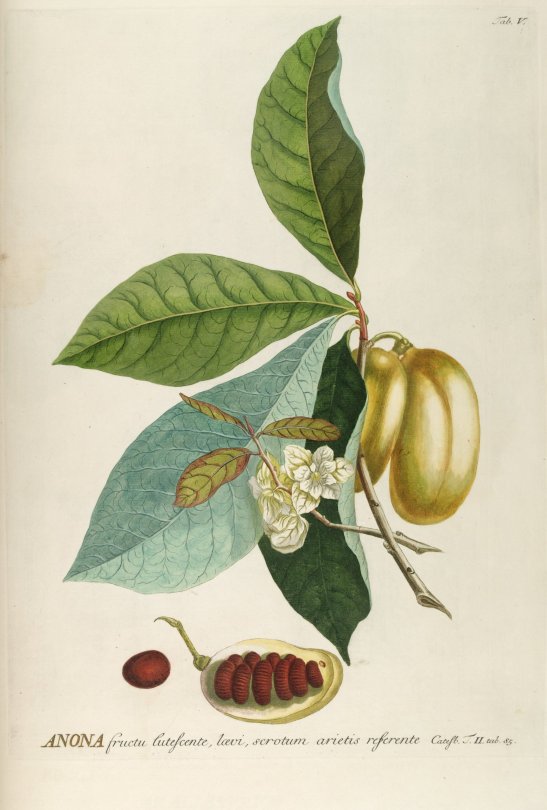
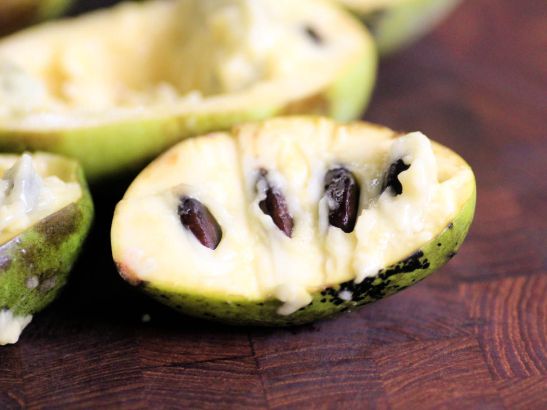
The pawpaw (Asimina triloba) is the largest edible fruit native to North America. Growing wild from the Midwest to the Atlantic Coast, the pawpaw tree thrives along riverbanks, in floodplains, and in the understory of forests. Its fruit, with greenish-yellow skin and creamy, custard-like flesh, has often been compared to bananas and mangoes, though its flavor is uniquely its own. Unlike many of the fruits we eat today, the pawpaw is not an imported species. It is a true American original.
Indigenous peoples were the first to cultivate and celebrate the pawpaw. Tribes such as the Shawnee, Iroquois, and Cherokee gathered the fruit in season, ate it fresh, and dried it for winter storage. Archaeological evidence suggests pawpaws were part of the diet in the Ohio River Valley for thousands of years. Beyond food, Indigenous communities used the fibrous inner bark of the tree to make ropes and nets. The pawpaw was woven into daily life in ways both practical and symbolic.
Early European settlers also came to rely on the pawpaw. Its abundance in the wild made it a welcome supplement to frontier diets. During difficult periods, it even served as a crucial survival food. There are accounts of George Washington enjoying pawpaws chilled as a dessert, and Thomas Jefferson reportedly grew them at Monticello. In 1806, members of the Lewis and Clark expedition noted that they subsisted almost entirely on pawpaws for several days when provisions ran low. For generations, the pawpaw was a humble but familiar fruit, eaten in season and remembered fondly.
In Maryland and the Chesapeake region, pawpaws were also well known in the eighteenth and nineteenth centuries. Colonists incorporated them into their seasonal diets, often picking them in late summer and early fall. Pawpaws appear in household records, diaries, and even some early cookbooks, reflecting their role as a local, accessible fruit. Plantation owners, farmers, and ordinary families alike valued the pawpaw for its flavor and versatility, sometimes eating it fresh or incorporating it into puddings and preserves. Its presence in Maryland history underscores how deeply native plants shaped daily life and sustenance during this period.


So why did the pawpaw fade from memory? The answer lies in the modern food system. Pawpaws spoil quickly—within just a few days after ripening—making them ill-suited for large-scale shipping and grocery store sales. As American agriculture shifted toward standardized, easily transported crops, the pawpaw was left behind. Bananas and oranges, shipped from thousands of miles away, became more common on tables than the pawpaw growing in nearby woods. Over time, what was once a staple of local diets became a curiosity.
Today, however, the pawpaw is experiencing a revival. Interest in native plants, sustainable agriculture, and regional food traditions has brought attention back to this overlooked fruit. Researchers and horticulturalists are developing new cultivars to improve consistency and flavor, while chefs experiment with pawpaw ice creams, breads, and beers. Festivals, such as the Ohio Pawpaw Festival, celebrate its heritage and reintroduce the fruit to younger generations.
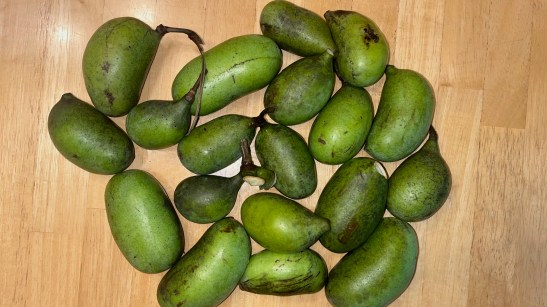
The history of the pawpaw reminds us how food traditions shift and how easily local abundance can be forgotten in the march of industrial agriculture. Yet it also shows the resilience of regional culture: a fruit once nearly lost to memory is finding its way back into American kitchens and imaginations. In tasting a pawpaw today, one connects not just to a seasonal delicacy but to a deeper history of survival, creativity, and belonging to the North American landscape.
For Further Reading:
Pawpaw: In Search of America’s Forgotten Fruit by Andrew Moore
“The Pawpaw, America’s Largest Edible Fruit, Grows Quietly in Baltimore” by Lydia Woolever
“Pawpaw: A Big Fruit in Need of Bigger Love” by Heritage Conservancy
“The Pawpaw: Foraging For America’s Forgotten Fruit” by Allison Aubrey
“The Mad Scientist of Pawpaws” by Bill Heavey
“The Promise of Pawpaw” by Anya Groner


 The Projector
You must be logged in to post a comment.